
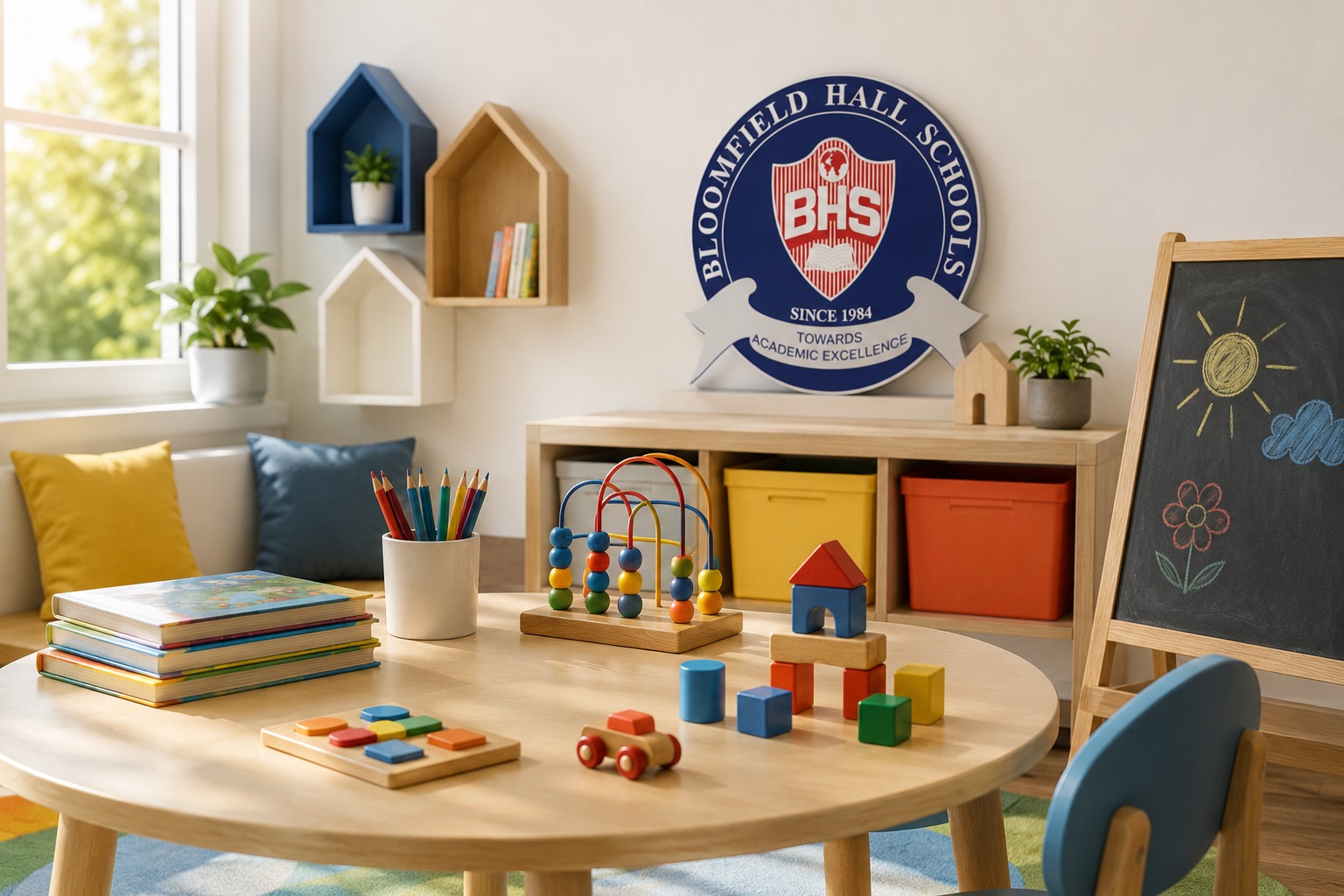
The best playgroup school in Multan makes children love learning through play, not pressure. Young children absorb concepts faster when curiosity leads the lesson, not the clock. Bloomfield Hall School uses seven specific strategies to build this early love for study.
Why Do Some Toddlers Resist Structured Learning?
Many young children associate classrooms with sitting still for long periods. This expectation often clashes with a toddler’s natural need to move and explore. As a result, children develop resistance before they even understand what learning means.
Parents sometimes assume this resistance means a child dislikes studying altogether. However, the real issue usually lies in how lessons get delivered. Rigid, lecture-style teaching rarely suits a three or four-year-old’s attention span. Therefore, the best playgroup school in Multan builds lessons around movement, curiosity, and short bursts of focus.
Strategy One: Learning Through Guided Play
Play remains the most natural way young children process new information. Instead of formal lessons, teachers introduce concepts through games and hands-on activities. A counting lesson might involve sorting colorful blocks rather than writing numbers.
This method keeps children engaged without them realising they are actually studying. Bloomfield Hall School designs its playgroup curriculum entirely around this guided-play model. Consequently, children build early academic skills while still enjoying every classroom moment.
Strategy Two: Short, Focused Activity Blocks
Toddlers typically hold attention for only ten to fifteen minutes at a time. Long lessons overwhelm young minds and lead to restlessness or frustration. Therefore, activities get broken into short blocks with clear transitions between them.
Each block covers one specific skill, whether counting, colors, or shapes. This structure prevents mental fatigue while still covering meaningful content daily. Teachers rotate activities frequently, keeping energy levels high throughout the school day.
Strategy Three: Storytelling as a Teaching Tool
Stories capture a child’s imagination far more effectively than plain instruction. Teachers introduce new vocabulary and concepts through simple, engaging narratives. Afterward, children act out parts of the story or answer related questions.
This approach builds language skills alongside listening comprehension naturally. Meanwhile, storytelling also strengthens emotional understanding through relatable characters and situations. The best playgroup school in Multan treats storytelling as a core teaching method, not extra entertainment.
Strategy Four: Positive Reinforcement Over Correction
Young children respond better to encouragement than repeated correction. Highlighting small wins builds confidence far more effectively than pointing out mistakes. Bloomfield Hall School trains its teachers to praise effort before addressing errors.
This shift changes how children view mistakes during early learning stages. Instead of fearing failure, children start viewing challenges as normal parts of learning. As a result, they approach new activities with curiosity rather than hesitation.
Strategy Five: Sensory-Based Learning Materials
Toddlers understand the world through touch, sound, and visual stimulation. Textured letters, musical counting games, and colorful visual aids support this natural style. Sensory materials help abstract concepts feel concrete and easy to grasp.
For example, tracing sand-filled letter shapes helps children remember alphabet formation faster. Similarly, songs paired with actions help numbers and sequences stick in memory. This strategy makes lessons memorable without relying on repetitive worksheet drills.
Strategy Six: Consistent Daily Routines
Predictability gives young children a strong sense of security in the classroom. Knowing what comes next reduces anxiety and improves overall classroom behaviour. Bloomfield Hall School follows a consistent daily schedule across circle time, play, and rest.
This routine helps children transition smoothly between different types of activities. Furthermore, familiar patterns free up mental energy for actual learning, not adjustment. Consequently, children settle into the school day faster and participate more actively.
Strategy Seven: Small Group Interaction
Large classrooms often leave shy or slower children unnoticed during lessons. Smaller groups allow teachers to give individual attention throughout each activity. This attention helps identify a child’s specific interests and learning pace early.
Group settings also teach sharing, turn-taking, and basic social skills naturally. Bloomfield Hall School keeps playgroup class sizes deliberately small for this exact reason. As a result, every child gets noticed, encouraged, and supported daily.
How Do These Strategies Work Together in Practice?
Individually, each strategy supports a different part of early childhood development. Together, however, they create a classroom environment built around genuine enjoyment. This combination is what separates the best playgroup school in Multan from average options.
A typical day might open with a story, move into sensory play, and close with small group games. Each transition feels natural rather than forced or rushed. Bloomfield Hall School structures its entire playgroup year around this seamless flow. Therefore, children leave each day excited to return the next morning.
What Results Do Parents Notice From This Approach?
Parents often report faster vocabulary growth within the first few months. Children also show more willingness to try new activities without hesitation. This confidence usually carries forward into formal schooling years later.
Teachers at Bloomfield Hall School track early developmental milestones throughout the term. This tracking helps parents understand exactly how their child is progressing. Undoubtedly, early confidence built through play creates a stronger foundation than early academic pressure ever could.
FAQs
What makes the best playgroup school in Multan different from a regular daycare?
A quality playgroup school follows a structured curriculum built around specific learning strategies. Bloomfield Hall School combines guided play with tracked developmental milestones, unlike typical daycare settings.
At what age should a child start playgroup?
Most children benefit from starting playgroup between two and three years old. This age allows enough independence for group activities without overwhelming the child.
How can parents reinforce these strategies at home?
Simple storytelling, sensory play, and consistent routines work well outside the classroom too. Parents do not need special training, just patience and regular repetition.
Does a playgroup with small class sizes really make a difference?
Yes, smaller groups allow teachers to notice individual needs much sooner. Bloomfield Hall School limits playgroup class sizes specifically to protect this personal attention.
Want Your Toddler to Genuinely Enjoy Learning?
Multan parents deserve a playgroup that builds curiosity instead of early academic pressure. Bloomfield Hall School applies all seven strategies daily to keep young learners engaged.
Visit Bloomfield Hall School’s Multan campus to see a playgroup session in action. Book a visit today and discover why families consider it the best playgroup school in Multan.